Are you ready to boost your business success and open doors to new opportunities?

Breaking Barriers: The Game-Changing Benefits of Certification for Diverse-Owned Businesses
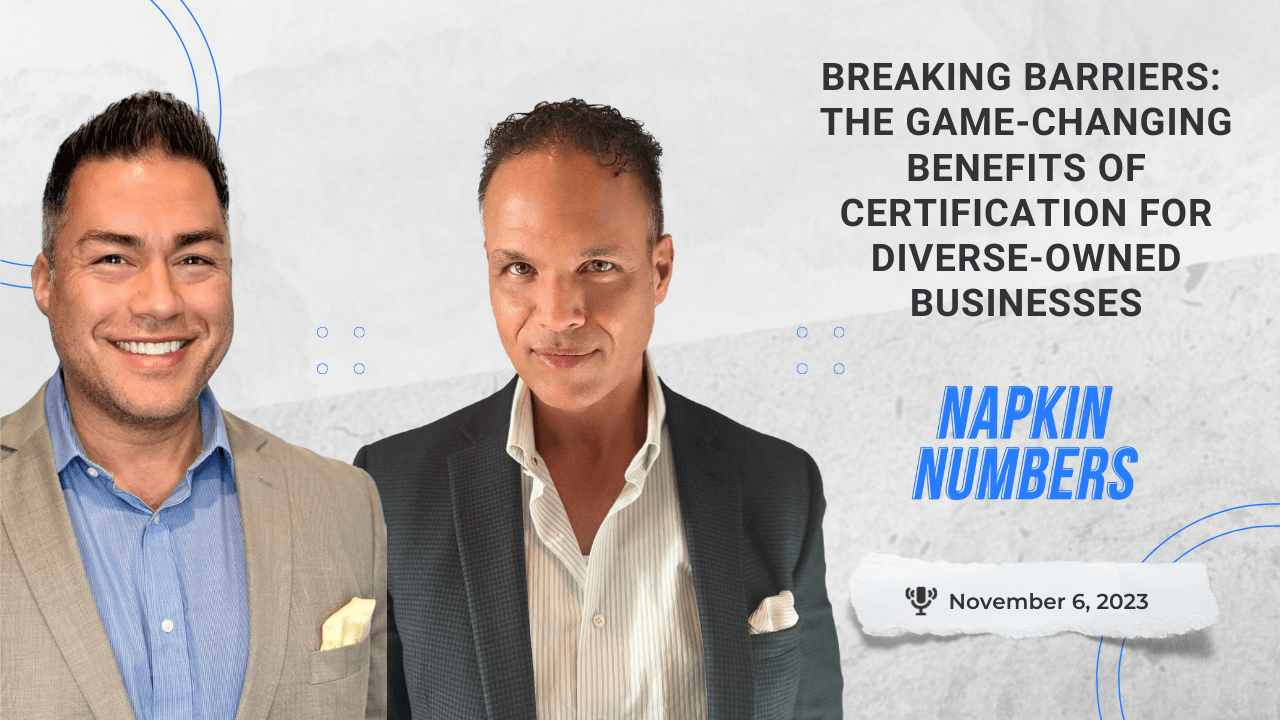
Certifications for women-owned, minority-owned or veteran-owned businesses have the power to enhance your visibility, growth and access to diverse business prospects.
However, navigating the certification process can take time and effort. That’s why Rahsaan and Scott share efficient strategies for obtaining certifications and maximizing your business opportunities in this episode of Napkin Numbers.
They also stress that obtaining certification is only the first step. To expand your business, utilizing the advantages of certification is essential. How? Scott and Rahsaan suggest effective marketing tactics and participation in relevant events to maximize certification opportunities.
Napkin Numbers Talking Points
[0:58] Introduction to MBE, Women, and Veteran Certifications
- Bringing awareness to these opportunities
- If you’re a woman, a veteran, or a minority, each of those carries different designations and opens other doors
- Dispelling the myth that the process is arduous
- Walking you through the certification process
[2:43] DBE Classification and National Certification
- Getting DBE classification opens up different doors than the state certification
- Getting the certifications allows you to show up in the state registries
- Use NMSDC to obtain national minority business enterprise designation
- NMSDC certification allows national suppliers/businesses to find women, veteran or minority-owned businesses
[5:04] Lack of Awareness and Importance of Designations
- Benefits of awareness and certification
- Tabor 100 example
- Importance of MBE/DBE certification
[6:05] Taking Action and Participating
- Importance of participating in the programs
- Inclusion advantages of being a part of these programs
- Nike Academy example
- National Black Supplier Development Council program example
[8:27] Offer of Help and Conclusion
- We offer pro bono work to help women, veterans, and minorities advance
- We try to share opportunities we are granted with others
- Each state has organizations focused on helping women, veterans, and minorities.
If you are ready to discover the value of your business, start the same way these buyers did! By completing our complimentary business evaluation calculator. Selling or buying a business might be more achievable than you think!
Resources mentioned in this episode:
National Minority Supplier Development Council (NMSDC)
www.nmsdc.org
Minority and Women-Owned Business Certification
www.mwbe-enterprises.com
Minority Business Enterprise
www.mwbe-enterprises.com/minority-business-enterprise-mbe-certification
Disadvantaged Business Enterprise
www.mwbe-enterprises.com/disadvantaged-business-enterprise-dbe-certification-2
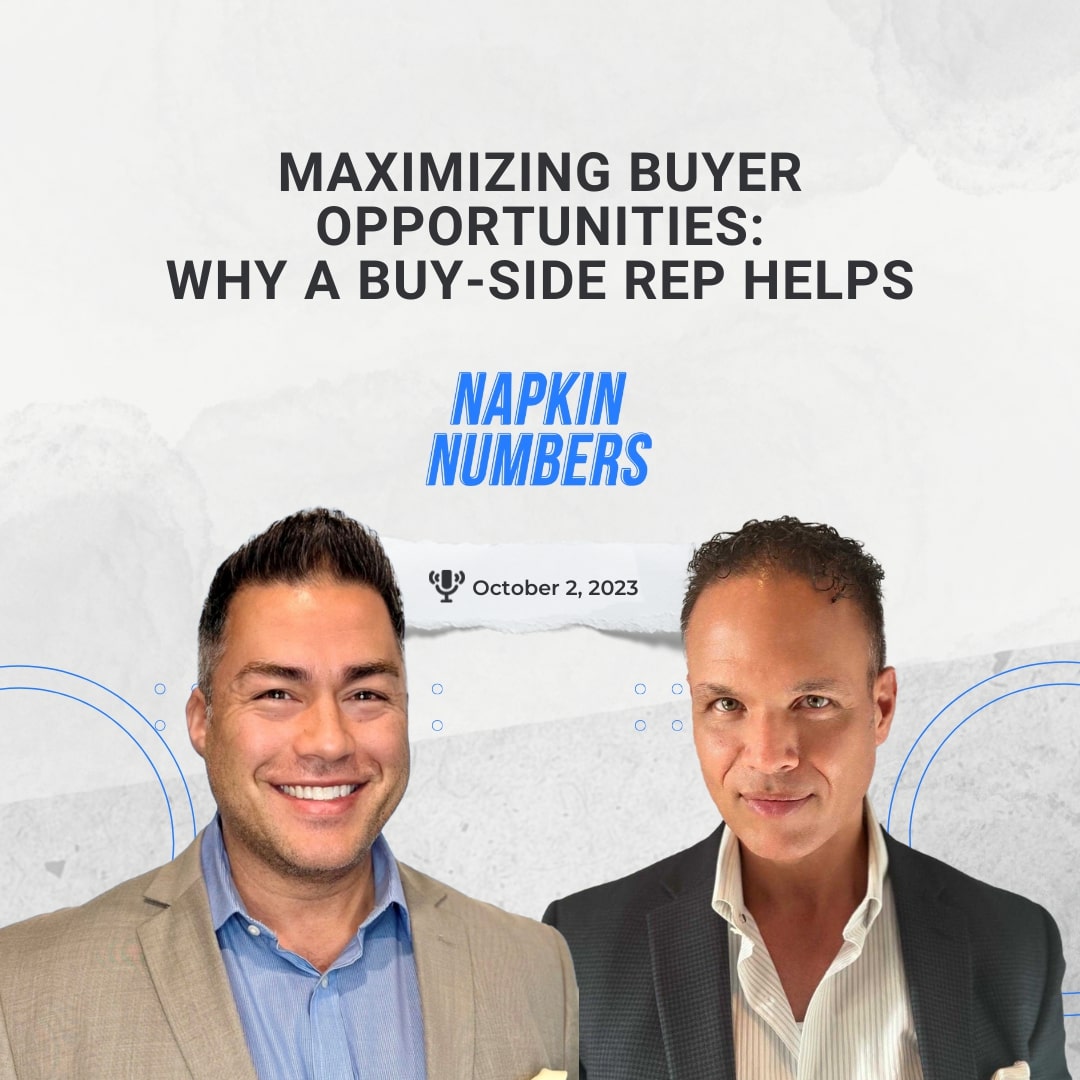
Maximizing Buyer Opportunities: Why A Buy-Side Rep Helps

Would you like to grow your business rapidly by acquiring another business? Or have you tried to purchase another business, and it hasn’t been the right fit?
Napkin Numbers Talking Points
[1:20] Case Study 1: Car Dealership Purchase
- Uncovered a mistake in the valuation: the seller counted PPP money
- Having a buy-side representative saved the buyer $500,000
- Found a new flooring line through experience and connections
- A working capital package was created, including SBA financing
[4:47] Case Study 2: Growth by Acquisition
- Experience in the business allowed us to overcome obstacles
- Misconceptions about growth by acquisition
- Business owners bought 2 largest competitors in their industry, increasing their bottom line
- Rapidly grow business with growth by acquisition
[8:05] Benefits of Buy-Side Representation
- Walk through ideas of what you need to accomplish when buying a business
- How the process works
- Due diligence in what things to look out for when buying a business
- Mindful about what happens after closing the sale
- What are you buying outside of the physical entities?
If you are ready to discover the value of your business, start the same way these buyers did! By completing our complimentary business evaluation calculator. Selling or buying a business might be more achievable than you think!
Understanding Your Worth: Keys to Successful Business Valuation

You’ve thought about selling your business someday, but do you know how many synergistic factors are involved in that valuation process? Do you want to gain a deeper understanding of how valuation impacts the sale of your business? Are you looking for a solution when it comes to this subjective aspect of business? Look no further because this episode of Napkin Numbers has the key to unlocking your understanding of valuation and its direct impact on business sales. By providing valuable insights and strategies, Scott and Rahsaan will empower you to achieve the desired outcome in the sale of your business.
Napkin Numbers Talking Points
[1:03] Types of Valuation
- What is Valuation?
- Real Estate Valuation
- Business Valuation
[2:29] Bank Financing in Valuation
- Bank Financing
- Leverage Financing
- Covering Shortfall
[3:10] Different Buyers, Different Values
- Woman-owned, Minorities
- Contract stipulations
- Matching with your Ideal Buyer
[5:09] Timing and Seller’s Value
- Determining the optimal time to sell
- Finding a higher price for your business
- Finding the right culture
If you are ready to discover the value of your business, start by completing our complimentary business evaluation calculator.
The Importance of Bankability

The financial institution you should work with will depend on the size and needs of your company, and these may change over time. To secure the best banking partner, you need to know how these organizations look at you from a risk standpoint so you can optimize your business’s appeal. But you must also research which institution can best serve your lending goals. In this episode of Napkin Numbers, Scott & Rahsaan go over all the basics of bankability that will help you confidently secure credit.
Napkin Numbers Talking Points
[1:06] 3 Types of Banking Institutions
- National
- Regional
- Credit Unions
[2:34] Why Bankability Matters
- What is bankability?
- How do banks look at you?
- How can you best meet your lending needs?
- 5 C’s of Credit that banks use for risk management
[3:23] 3 Components of Financial Ratio
- Leverage
- Liquidity
- Coverage
[4:15] Leverage
- How to calculate it using debt and equity
- The ideal ratio banks look for
[5:16] Liquidity
- What it means and how to calculate it
- Comparing your current assets and liabilities
- The ideal ratio banks look for
[6:11] Coverage
- Are you making enough money annually to pay off your debt?
- Calculating your EBITDA
- Considering capital expenditures
- Ideal Debt Service Coverage ratio
[8:55] How to make your business a good risk
- Have a strong balance sheet and income statement
- Articulate your business plan effectively
- Be transparent
- Have strong advisors
[9:50] Common misunderstandings
- Getting help with start-ups
- Running a lot versus a little bit of money through the bank
- Pressure to show a constant profit
- Communicate with your banker
[10:36] 4 questions to ask your banker
- Finding a banker who can help your business grow
Finding the right bank for your business isn’t just about impressing lenders. Getting your finances in order and presenting a trustworthy, dependable image is important. But you also need to consider the best financial institution for your unique needs.
If you want to see where your company stands, try our free business evaluation calculator.

Flaws In Your Business and How It Can Impact Your Company When You’re Trying To Sell

When potential buyers look at your business, 4 main categories will entice them to make an offer or scare them away. When you know how to optimize these core elements of your business, you can set yourself up for success and boost your chances of a lucrative sale.
Listen in to learn how your products, workforce, industry, and customers can significantly influence your business’s appeal to interested buyers.
Napkin Numbers Talking Points
[0:55] #1 How flaws in your business can impact the selling process
- Products
- Workforce
- Industry
- Customers
[1:17] #2 Products
- Are your products diverse?
- What sets you apart from the crowd?
- If you have one product, are you properly highlighting it?
[2:21] #3 Workforce
- Is your team big enough to allow for scaling and consistency?
- Does labor limit you?
[2:51] #4 Industry
- Don’t forget about your competitors
- Take into account the unique risk factors of the industry you’re in
- Exit at a time when your industry is healthy
[3:48] #5 Customers
- How highly concentrated is your customer base?
- Do you have a few big clients or lots of smaller ones?
- What happens if your big clients leave when you exit?
By knowing exactly what potential buyers think when they consider purchasing your business, you take the power into your own hands. Use the tips in this episode as a cheat sheet to prepare for an easy and enjoyable exit. The bottom line: show buyers that they’ll be able to transition into taking over your business without a hitch.
Ready to take the next steps on your exciting journey to transitioning out of your company? Use our free business evaluation calculator.

3 Ways To Make Your Business More Appealing
As a small business owner, we understand that you’ve dedicated countless hours to building your company, and when it’s time to consider what comes next, chances are you will want to exit your company on your terms. This episode of Napkin Numbers delves into the three ways to make your business more appealing when preparing to sell.
Drawing from our combined 50+ years of experience, we share some real-world exit strategies that could pave the way for your next move, ensuring a seamless transition and reaping the maximum benefits of your hard work.
Napkin Numbers Talking Points
[02:29] #1 Automating Processes
- If your processes are only inside your head, that can translate to risk for a new owner.
- It is crucial to automate to reduce uncertainty and increase your business’s value in the eyes of potential buyers.
[02:08] #2 Strong Second in Command
- Having a strong second-in-command – not only shares the burden of managing the sales process but also reassures potential buyers about the continuity and stability of the business.
[03:01] #3 Keep things consistent
- Keeping things stable and predictable prevents employee turnover and supports critical contracts, facilitating a smooth transition.
To begin the sales process, you need to discover the value of your business. Get your complimentary business evaluation using Freeman Lundt’s Business Evaluation Calculator. Let Freeman Lundt’s experts guide you through the process and start by taking the first step with this complimentary evaluation.
